Pope Benedict Vs. Francis Part 4

AM+DG

The English Denzinger site (which was run by (20) priests, and which (strangely??) has not been active for a few years, was invaluable and priceless in terms of comparing everything Francis claimed to what authentic Church Teaching says.

The following is an example of one article I had saved. It is very long, so I will post just a few bits every day. The following continues from yesterday’s post.

+++++++++++++++++++++++++

Benedict XVI…

…judges Francis’ idea that Koran is a book of peace


  • There is no peace without justice

You know, as I do, that authentic peace is only possible when justice reigns. Our world is thirsting for peace and justice. (Benedict XVI. Address to the new ambassadors to the Holy See, December 18, 2008)

  • Peace is a heavenly gift and a divine grace that demands conforming human history to the divine order

Seen in this way, peace appears as a heavenly gift and a divine grace which demands at every level the exercise of the highest responsibility: that of conforming human history–in truth, justice, freedom and love–to the divine order. Whenever there is a loss of fidelity to the transcendent order, and a loss of respect for that ‘grammar’ of dialogue which is the universal moral law written on human hearts, whenever the integral development of the person and the protection of his fundamental rights are hindered or denied, whenever countless people are forced to endure intolerable injustices and inequalities, how can we hope that the good of peace will be realized? The essential elements which make up the truth of that good are missing. Saint Augustine described peace as tranquillitas Ordinis (De Civitate Dei, XIX, 13) the tranquillity of order. By this, he meant a situation which ultimately enables the truth about man to be fully respected and realized. (Benedict XVI. Message for the celebration of the XXXIX World Day of Peace, no. 4, January 1, 2006)

  • Peace also demands of everyone a personal response consistent with God’s plan – according to the ‘grammar’ written on human hearts

The transcendent ‘grammar’, that is to say the body of rules for individual action and the reciprocal relationships of persons in accordance with justice and solidarity, is inscribed on human consciences, in which the wise plan of God is reflected. As I recently had occasion to reaffirm: ‘we believe that at the beginning of everything is the Eternal Word, Reason and not Unreason’ (Homily at Regensburg, 12 September 2006). Peace is thus also a task demanding of everyone a personal response consistent with God’s plan. The criterion inspiring this response can only be respect for the ‘grammar’ written on human hearts by the divine Creator. (Benedict XVI. Message for the celebration of the XL World Day of Peace, January 1, 2007)

  • Recognition and respect for natural law: fundamental presupposition for authentic peace

Recognition and respect for natural law represents the foundation for a dialogue between the followers of the different religions and between believers and non-believers. As a great point of convergence, this is also a fundamental presupposition for authentic peace. (Benedict XVI. Message for the celebration of the XL World Day of Peace, January 1, 2007)

  • Peace on earth cannot be found without reconciliation with God

Peace on earth cannot be found without reconciliation with God, without harmony between Heaven and earth. (Benedict XVI. Address to the members of the Roman Curia, December 22. 2006)

  • Sin: a progressive rejection of peace

Mankind can overcome that progressive dimming and rejection of peace which is sin in all its forms. (Benedict XVI. Message for the celebration of the XLVI World Day of Peace, no. 3, January 1. 2013)

  • It is only through the Redemption that man can overcome the progressive rejection of peace, and be an authentic peacemaker

To become authentic peacemakers, it is fundamental to keep in mind our transcendent dimension and to enter into constant dialogue with God, the Father of mercy, whereby we implore the redemption achieved for us by his only-begotten Son. In this way mankind can overcome that progressive dimming and rejection of peace which is sin in all its forms: selfishness and violence, greed and the will to power and dominion, intolerance, hatred and unjust structures. (Benedict XVI. Message for the celebration of the XLVI World Day of Peace, no. 3, January 1. 2013)

  • True peace comes from Christ

True peace comes from Christ (cf. Jn 14:27). It cannot be compared with the peace that the world gives. It is not the fruit of negotiations and diplomatic agreements based on particular interests. It is the peace of a humanity reconciled with itself in God, a peace of which the Church is the sacrament. (Benedict XVI. Apostolic exhortation Africae munus, no. 30, November 30, 2011)

  • Wherever Christ is welcomed, islands of peace develop

Et erit iste pax’ – this will be peace, the Prophet Micah says (Mic 5:4) about the future ruler of Israel, whose birth in Bethlehem he announces. The Angels said to the shepherds grazing their flocks in the fields around Bethlehem: ‘on earth peace among men’, the expected One has arrived (Lk 2:14). He himself, Christ, the Lord, said to his disciples: ‘Peace I leave with you; my peace I give to you’ (Jn 14:27). It is from these words that the liturgical greeting developed: ‘Peace be with you’. This peace that is communicated in the liturgy is Christ himself. He gives himself to us as peace, as reconciliation beyond all frontiers. Wherever he is welcomed, islands of peace develop. (Benedict XVI. Address to the Roman Curia, December 22, 2006)

  • Peace in this world always remains weak and fragile for it implies opening our hearts to God

We human beings would have liked Christ to banish all wars once and for all, to destroy weapons and establish universal peace. But we have to learn that peace cannot be attained only from the outside with structures, and that the attempt to establish it with violence leads only to ever new violence. We must learn that peace – as the Angel of Bethlehem said – is connected with eudokia, with the opening of our hearts to God. We must learn that peace can only exist if hatred and selfishness are overcome from within. The human being must be renewed from within, must become new and different. Thus, peace in this world always remains weak and fragile. We suffer from this. For this very reason we are called especially to let ourselves be penetrated within by God’s peace and to take his power into the world. All that was wrought in and through the Sacrament of Baptism must be fulfilled in our lives: the dying of the former self, hence, the rebirth of the new. And we will pray to the Lord insistently over and over again: Please move hearts! Make us new people! Help the reason of peace to overcome the irrationality of violence! Make us bearers of your peace! (Benedict XVI. Address to the Roman Curia, December 22, 2006)

  • Jesus builds the great new community of new men who place their will in his

The stable becomes a palace – and setting out from this starting-point, Jesus builds the great new community, whose key-word the angels sing at the hour of his birth: ‘Glory to God in the highest, and peace on earth to those whom he loves’ – those who place their will in his, in this way becoming men of God, new men, a new world. (Benedict XVI. Homily for the Solemnity of the Nativity of the Lord, December 25, 2007)

  • Christ is our true peace: in him there is but one family reconciled in love

‘Peace is not merely the absence of war, and it is not limited to maintaining a balance of powers between adversaries. Peace cannot be attained on earth without safeguarding the goods of persons, free communication among men, respect for the dignity of persons and peoples, and the assiduous practice of fraternity’. We Christians believe that Christ is our true peace: in him, by his Cross, God has reconciled the world to himself and has broken down the walls of division that separated us from one another (cf. Eph 2:14 – 18); in him, there is but one family, reconciled in love. (Benedict XVI. Message for the celebration of the XLV World Day of Peace, no. 5, January 1, 2012)

  • If peace is to be authentic and lasting it must be built on the bedrock of the truth about God and the truth about man

For her part, the Church, in fidelity to the mission she has received from her Founder, is committed to proclaiming everywhere ‘the Gospel of peace’. In the firm conviction that she offers an indispensable service to all those who strive to promote peace, she reminds everyone that, if peace is to be authentic and lasting, it must be built on the bedrock of the truth about God and the truth about man. This truth alone can create a sensitivity to justice and openness to love and solidarity, while encouraging everyone to work for a truly free and harmonious human family. The foundations of authentic peace rest on the truth about God and man. (Benedict XVI. Message for the celebration of the XXXIX World Day of Peace, no. 15, January 1, 2006)

  • Any authentic search for peace must begin with the realization that the problem of truth and untruth is the concern of every man and woman

Who and what, then, can prevent the coming of peace? Sacred Scripture, in its very first book, Genesis, points to the lie told at the very beginning of history by the animal with a forked tongue, whom the Evangelist John calls ‘the father of lies’ (Jn 8:44). Lying is also one of the sins spoken of in the final chapter of the last book of the Bible, Revelation, which bars liars from the heavenly Jerusalem: ‘outside are… all who love falsehood’ (Jn 22:15). Lying is linked to the tragedy of sin and its perverse consequences, which have had, and continue to have, devastating effects on the lives of individuals and nations. […] Any authentic search for peace must begin with the realization that the problem of truth and untruth is the concern of every man and woman; it is decisive for the peaceful future of our planet. (Benedict XVI. Message for the celebration of the XXXIX World Day of Peace, January 1, 2006)

  • A fundamental presupposition for authentic peace: respect for the Natural Law– to carry out the divine plan inscribed in the nature of human beings

From this standpoint, the norms of the natural law should not be viewed as externally imposed decrees, as restraints upon human freedom. Rather, they should be welcomed as a call to carry out faithfully the universal divine plan inscribed in the nature of human beings. Guided by these norms, all peoples – within their respective cultures – can draw near to the greatest mystery, which is the mystery of God. Today too, recognition and respect for natural law represents the foundation for a dialogue between the followers of the different religions and between believers and non-believers. As a great point of convergence, this is also a fundamental presupposition for authentic peace. (Benedict XVI. Message for the celebration of the XL World Day of Peace, January 1, 2007)

  • Violence is incompatible with the nature of God and the nature of the soul

I was reminded of all this recently, when I read the edition by Professor Theodore Khoury (Münster) of part of the dialogue carried on – perhaps in 1391 in the winter barracks near Ankara – by the erudite Byzantine emperor Manuel II Paleologus and an educated Persian on the subject of Christianity and Islam, and the truth of both. […] The dialogue ranges widely over the structures of faith contained in the Bible and in the Qur’an, and deals especially with the image of God and of man, while necessarily returning repeatedly to the relationship between – as they were called – three ‘Laws’ or ‘rules of life’: the Old Testament, the New Testament and the Qur’an. […] In the seventh conversation (διάλεξις – controversy) edited by Professor Khoury, the emperor touches on the theme of the holy war. The emperor must have known that surah 2, 256 reads: ‘There is no compulsion in religion’. According to some of the experts, this is probably one of the suras of the early period, when Mohammed was still powerless and under threat. But naturally the emperor also knew the instructions, developed later and recorded in the Qur’an, concerning holy war. Without descending to details, such as the difference in treatment accorded to those who have the ‘Book’ and the ‘infidels’, he addresses his interlocutor with a startling brusqueness, a brusqueness that we find unacceptable, on the central question about the relationship between religion and violence in general, saying: ‘Show me just what Mohammed brought that was new, and there you will find things only evil and inhuman, such as his command to spread by the sword the faith he preached.’ The emperor, after having expressed himself so forcefully, goes on to explain in detail the reasons why spreading the faith through violence is something unreasonable. Violence is incompatible with the nature of God and the nature of the soul. ‘God’, he says, ‘is not pleased by blood – and not acting reasonably (σὺν λόγω) is contrary to God’s nature. Faith is born of the soul, not the body. Whoever would lead someone to faith needs the ability to speak well and to reason properly, without violence and threats… To convince a reasonable soul, one does not need a strong arm, or weapons of any kind, or any other means of threatening a person with death…’. The decisive statement in this argument against violent conversion is this; not to act in accordance with reason is contrary to God’s nature. The editor, Theodore Khoury, observes: For the emperor, as a Byzantine shaped by Greek philosophy, this statement is self-evident. But for Muslim teaching, God is absolutely transcendent. His will is not bound up with any of our categories, even that of rationality. Here Khoury quotes a work of the noted French Islamist R. Arnaldez, who points out that Ibn Hazm went so far as to state that God is not bound even by his own word, and that nothing would oblige him to reveal the truth to us. Were it God’s will, we would even have to practice idolatry. (Benedict XVI. Address in the University of Regensburg, September 12, 2006)

  • Sufferings of the Christian community in Iraq

Sadly, the year now ending has again been marked by persecution, discrimination, terrible acts of violence and religious intolerance. My thoughts turn in a special way to the beloved country of Iraq, which continues to be a theatre of violence and strife as it makes its way towards a future of stability and reconciliation. I think of the recent sufferings of the Christian community, and in particular the reprehensible attack on the Syro-Catholic Cathedral of Our Lady of Perpetual Help in Baghdad, where on 31 October two priests and over fifty faithful were killed as they gathered for the celebration of Holy Mass. In the days that followed, other attacks ensued, even on private homes, spreading fear within the Christian community and a desire on the part of many to emigrate in search of a better life. I assure them of my own closeness and that of the entire Church, a closeness which found concrete expression in the recent Special Assembly for the Middle East of the Synod of Bishops. The Synod encouraged the Catholic communities in Iraq and throughout the Middle East to live in communion and to continue to offer a courageous witness of faith in those lands. (Benedict XVI. Message for the celebration of the XLIV World Day of Peace, no. 1, January 1, 2011)

  • Numerous conflicts causing bloodshed in our human family, beginning with that privileged region in God’s plan, the Middle East

Consequently, if the glorification of God and earthly peace are closely linked, it seems evident that peace is both God’s gift and a human task, one which demands our free and conscious response. For this reason, I wished my annual Message for the World Day of Peace to bear the title: Blessed are the Peacemakers. Civil and political authorities before all others have a grave responsibility to work for peace. They are the first called to resolve the numerous conflicts causing bloodshed in our human family, beginning with that privileged region in God’s plan, the Middle East. I think first and foremost of Syria, torn apart by endless slaughter and the scene of dreadful suffering among its civilian population. I renew my appeal for a ceasefire and the inauguration as quickly as possible of a constructive dialogue aimed at putting an end to a conflict which will know no victors but only vanquished if it continues, leaving behind it nothing but a field of ruins. Your Excellencies, allow me to ask you to continue to make your Governments aware of this, so that essential aid will urgently be made available to face this grave humanitarian situation. I now turn with deep concern towards the Holy Land. Following Palestine’s recognition as a Non-Member Observer State of the United Nations, I again express the hope that, with the support of the international community, Israelis and Palestinians will commit themselves to peaceful coexistence within the framework of two sovereign states, where respect for justice and the legitimate aspirations of the two peoples will be preserved and guaranteed. Jerusalem, become what your name signifies! A city of peace and not of division; a prophecy of the Kingdom of God and not a byword for instability and opposition!

As I turn my thoughts towards the beloved Iraqi people, I express my hope that they will pursue the path of reconciliation in order to arrive at the stability for which they long.

In Lebanon, where last September I met the various groups which make up society, may the many religious traditions there be cultivated by all as a true treasure for the country and for the whole region, and may Christians offer an effective witness for the building of a future of peace, together with all men and women of good will!

In North Africa too, cooperation between all the members of society is of primary concern, and each must be guaranteed full citizenship, the liberty publicly to profess their religion and the ability to contribute to the common good. I assure all Egyptians of my closeness and my prayers at this time when new institutions are being set in place.

Turning to sub-Saharan Africa, I encourage the efforts being made to build peace, especially in those places where the wounds of war remain open and where their grave humanitarian consequences are being felt. I think particularly of the Horn of Africa, and the East of the Democratic Republic of the Congo, where new of acts of violence have erupted, forcing many people to abandon their homes, families and surroundings. Nor can I fail to mention other threats looming on the horizon. Nigeria is regularly the scene of terrorist attacks which reap victims above all among the Christian faithful gathered in prayer, as if hatred intended to turn temples of prayer and peace into places of fear and division. I was deeply saddened to learn that, even in the days when we celebrated Christmas, some Christians were barbarously put to death. Mali is also torn by violence and marked by a profound institutional and social crisis, one which calls for the effective attention of the international community. In the Central African Republic, I hope that the talks announced as taking place shortly will restore stability and spare the people from reliving the throes of civil war. (Benedict XVI. Address to the members of the Diplomatic Corps accredited to the Holy See, January 7, 2013)


Pope Benedict Vs. Francis Part 3

AM+DG


The English Denzinger site (which was run by (20) priests, and which (strangely??) has not been active for a few years, was invaluable and priceless in terms of comparing everything Francis claimed to what authentic Church Teaching says.

The following is an example of one article I had saved. It is very long, so I will post just a few bits every day. The following continues from yesterday’s post.

+++++++++++++++++++++++++

Benedict XVI…

…judges Francis’ idea that Jesus is only mercy

  • Justice and charity coincide in God

Justice and mercy, justice and charity on which the Church’s charity is hinged, are two different realities only for the human person. For we distinguish carefully between a just act and an act of love. For us ‘just’ means ‘what is due to the other’, while ‘merciful’ is what is given out of kindness. One seems to exclude the other. Yet for God it is not like this: justice and charity coincide in him; there is no just action that is not also an act of mercy and pardon, and at the same time, there is no merciful action that is not perfectly just. How far God’s logic is from our own! And how different is his way of acting from ours! (Benedict XVI. Address in the Rebibbia district prison, Rome, December 18, 2011)

  • The parable of the rich man and poor Lazarus shows how earthly wickedness is overturned by divine justice

Today, Luke’s Gospel presents to us the parable of the rich man and poor Lazarus (Lk 16: 19-31). […] The story shows how earthly wickedness is overturned by divine justice: after his death, Lazarus was received ‘in the bosom of Abraham’, that is, into eternal bliss; whereas the rich man ended up ‘in Hades, in torment’. This is a new and definitive state of affairs against which no appeal can be made, which is why one must mend one’s ways during one’s life; to do so after serves no purpose. (Benedict XVI. Angelus, September 30, 2007)

  • God is the one who proclaims justice forcefully

Dear brothers and sisters, human justice and divine justice differ greatly. People are unable of course to apply divine justice. However they must at least look at it, seeking to understand the profound spirit that motivates it so that it may also illumine human justice and thereby prevent the inmate from becoming an outcast, which unfortunately happens all too often. […] God is the one who proclaims justice forcefully but at the same time heals wounds with the balm of mercy. The parable in Matthew’s Gospel of the laborers, called to work by day in the vineyard (Mt 20:1-16), enables us to understand the difference between human and divine justice because it makes the delicate relationship between justice and mercy explicit. The parable describes a farmer who hired laborers to work in his vineyard. But he did so at different times of day so that some of them worked all day and others only for an hour. When the time came to pay their wages the owner of the vineyard elicited amazement and started a discussion among the laborers. The matter concerned the generosity — considered unfair by those present — of the vineyard owner who decided to give the same remuneration to the workers hired in the morning as to those hired in the afternoon. In the human perspective this decision was an authentic form of unfairness, from God’s viewpoint an act of kindness, because divine justice gives to each what he is due and includes in addition mercy and forgiveness. (Benedict XVI. Address in the Rebibbia district prison, Rome, December 18, 2011)

  • Injustice: its origin lies in the human heart in a mysterious cooperation with evil

The Evangelist Mark reports the following words of Jesus, which are inserted within the debate at that time regarding what is pure and impure: ‘There is nothing outside a man which by going into him can defile him; but the things which come out of a man are what defile him … What comes out of a man is what defiles a man. For from within, out of the heart of man, come evil thoughts (Mk 7:14-15, 20-21). Beyond the immediate question concerning food, we can detect in the reaction of the Pharisees a permanent temptation within man: to situate the origin of evil in an exterior cause. Many modern ideologies deep down have this presupposition: since injustice comes ‘from outside,’ in order for justice to reign, it is sufficient to remove the exterior causes that prevent it being achieved. This way of thinking – Jesus warns – is ingenuous and shortsighted. Injustice, the fruit of evil, does not have exclusively external roots; its origin lies in the human heart, where the seeds are found of a mysterious cooperation with evil. (Benedict XVI. Message for Lent 2010, October 30, 2009)

  • Justice signifies full acceptance of the will of the God, and equity in relation to one’s neighbor

At the heart of the wisdom of Israel, we find a profound link between faith in God who ‘lifts the needy from the ash heap’ (Ps 113:7) and justice towards one’s neighbor. The Hebrew word itself that indicates the virtue of justice, sedaqah, expresses this well. Sedaqah, in fact, signifies on the one hand full acceptance of the will of the God of Israel; on the other hand, equity in relation to one’s neighbour (cf. Ex 20:12-17). (Benedict XVI. Message for Lent 2010, October 30, 2009)

…judges Francis’ idea on the poor being the heart of the Gospel

  • Christ lives in the Sacred Scriptures

The Church knows well that Christ lives in the Sacred Scriptures. For this very reason – as the Constitution stresses – she has always venerated the divine Scriptures in the same way as she venerates the Body of the Lord (cf. Dei Verbum, no. 21). (Benedict XVI. Address for the 40th anniversary of the Dogmatic Constitution on Divine revelation Dei Verbum, September 16, 2005)

  • God’s love for man is the heart of the Gospel

The Letter to the Hebrews has set us before Christ, the eternal High Priest, exalted to the Father’s glory after offering himself as the one perfect sacrifice of the New Covenant in which the work of Redemption was accomplished. St Augustine fixed his gaze on this mystery and in it he found the Truth he was so ardently seeking. Jesus Christ, the Incarnate Word, the Sacrificed and Risen Lamb, is the Face of God-Love for every human being on his journey along the paths of time towards eternity. The Apostle John writes in a passage that can be considered parallel to the one just proclaimed in the Letter to the Hebrews: ‘In this is love, not that we loved God but that he loved us and sent his Son to be the expiation for our sins’ (I Jn 4: 10). Here is the heart of the Gospel, the central nucleus of Christianity. (Benedict XVI. Homily during the pastoral visit to Vigevano and Pavia, Italy, April 22, 2007)

  • The Gospel transmits a universal message: ‘Make disciples of all nations’

The Church, in other words, must constantly rededicate herself to her mission. The three Synoptic Gospels highlight various aspects of the missionary task. The mission is built first of all upon personal experience: ‘You are witnesses’ (Lk 24:48); it finds expression in relationships: ‘Make disciples of all nations’ (Mt 28:19); and it spreads a universal message: ‘Preach the Gospel to the whole creation’ (Mk 16:15). Through the demands and constraints of the world, however, this witness is constantly obscured, the relationships are alienated and the message is relativized. (Benedict XVI. Address to the Catholics engaged in the life of the Church and society, September 25, 2011)


Pope Benedict Vs. Francis Part 2

AM+DG

The English Denzinger site (which was run by (20) priests, and which (strangely??) has not been active for a few years, was invaluable and priceless in terms of comparing everything Francis claimed to what authentic Church Teaching says.

The following is an example of one article I had saved. It is very long, so I will post just a few bits every day. The following continues from yesterday’s post.

+++++++++++++++++++++++++

Benedict XVI…

…judges Francis’ idea on proclaiming the Gospel only with gentleness

  • It is our mission to proclaim the whole of God’s will, in its totality and ultimate simplicity – even when inconvenient

This is important; the Apostle did not preach an ‘à la carte’ Christianity to suit his own inclinations, he did not preach a Gospel to suit his own favourite theological ideas; he did not shrink from the commitment to proclaiming the whole of God’s will, even an inconvenient will and even topics of which he was personally not so enamoured. It is our mission to proclaim the whole of God’s will, in its totality and ultimate simplicity. But it is important that we teach and preach, as St Paul says here, and really propose the will of God in its entirety. (Benedict XVI. Lectio Divina given at the meeting with the parish priests of the Rome diocese, March 10, 2011)

  • Christian admonishment is always moved by love and mercy

I am thinking of all those Christians who, out of human regard or purely personal convenience, adapt to the prevailing mentality, rather than warning their brothers and sisters against ways of thinking and acting that are contrary to the truth and that do not follow the path of goodness. Christian admonishment, for its part, is never motivated by a spirit of accusation or recrimination. It is always moved by love and mercy, and springs from genuine concern for the good of the other. (Benedict XVI. Message for lent, 2012, no. 1, November 3, 2011)

…judges Francis’ idea on proclaiming the Gospel

  • The hermeneutic of discontinuity: a split between the pre-conciliar and the post-conciliar Church. This is to fundamentally misunderstand what a Council is

What has been the result of the Council? Was it well received? What, in the acceptance of the Council, was good and what was inadequate or mistaken? What still remains to be done? […] The question arises: Why has the implementation of the Council, in large parts of the Church, thus far been so difficult? Well, it all depends on the correct interpretation of the Council or – as we would say today – on its proper hermeneutics, the correct key to its interpretation and application. The problems in its implementation arose from the fact that two contrary hermeneutics came face to face and quarreled with each other. One caused confusion, the other, silently but more and more visibly, bore and is bearing fruit. On the one hand, there is an interpretation that I would call ‘a hermeneutic of discontinuity and rupture’; it has frequently availed itself of the sympathies of the mass media, and also one trend of modern theology. On the other, there is the ‘hermeneutic of reform’, of renewal in the continuity of the one subject-Church which the Lord has given to us. She is a subject which increases in time and develops, yet always remaining the same, the one subject of the journeying People of God. The hermeneutic of discontinuity risks ending in a split between the pre-conciliar Church and the post-conciliar Church. […] The nature of a Council as such is therefore basically misunderstood. In this way, it is considered as a sort of constituent that eliminates an old constitution and creates a new one. (Benedict XVI. Address to the Roman Curia, December 22, 2005)

  • We must see the Council in this perspective of continuity

This point is also important with regard to the Council. We need not, as I said to the Roman Curia before Christmas, live the hermeneutic of discontinuity, but rather the hermeneutic of renewal, which is the spirituality of continuity, of going ahead in continuity. […] We must accept newness but also love continuity, and we must see the Council in this perspective of continuity. (Benedict XVI. Address to the members of the Roman clergy, March 2, 2006)

  • The Church, both before and after the Council, was and is the same Church

The Church, both before and after the Council, was and is the same Church, one, holy, catholic and apostolic, journeying on through time; she continues ‘her pilgrimage amid the persecutions of the world and the consolations of God’, proclaiming the death of the Lord until he comes (cf. Lumen Gentium, no. 8). (Benedict XVI. Address to the Roman Curia, December 22, 2005)

  • Proclaim the Gospel without fear or reticence, never yielding to the conditioning of the world

The truth about Gospel love concerns every person and the whole person, and involves the Pastor in proclaiming it without fear or reticence, and never yielding to the conditioning of the world in season and out of season (cf. 2Tim 4:2). Dear Brothers in the Episcopate, in a time such as our own, marked by the growing phenomenon of globalization, it is ever more necessary to make the truth about Christ and his Gospel of salvation reach everyone. (Benedict XVI. Address to the members of the 11th Ordinary Council of the General Secretariat of the Synod of Bishops, June 1, 2006)

  • The Church of love is also the Church of truth and fidelity to the Gospel

The Church of love is also the Church of truth, understood primarily as fidelity to the Gospel entrusted by the Lord Jesus to his followers. It was being made children of the same Father by the Spirit of truth that gave rise to Christian brotherhood: ‘For all who are led by the Spirit of God are sons of God’ (Rom 8:14). However, if the family of God’s children is to live in unity and peace, it needs someone to keep it in the truth and guide it with wise and authoritative discernment: this is what the ministry of the Apostles is required to do. (Benedict XVI. General audience, April 5, 2006)

…judges Francis’ idea on new forms of poverty

  • …but there are those who have totally destroyed their desire for truth

There can be people who have totally destroyed their desire for truth and readiness to love, people for whom everything has become a lie, people who have lived for hatred and have suppressed all love within themselves. This is a terrifying thought, but alarming profiles of this type can be seen in certain figures of our own history. In such people all would be beyond remedy and the destruction of good would be irrevocable: this is what we mean by the word Hell. (Benedict XVI. Encyclical Spe salvi, no. 45, November 30, 2007)

  • It is not enough to care for the body, we must adorn the soul with the divine gifts acquired through Baptism

Through treatment, which includes medical, psychological and educational assistance, and through much prayer, manual work and discipline, many people – especially young people –have already succeeded in freeing themselves from alcohol and drug dependency, thereby recovering meaning in their lives. I wish to express my appreciation for this work, which has the charism of Saint Francis and the spirituality of the Focolare Movement as its spiritual foundation. Reintegration in society undoubtedly demonstrates the effectiveness of your initiative. Yet it is the conversions, the rediscovery of God and active participation in the life of the Church which attract even greater attention and which confirm the importance of your work. It is not enough to care for the body, we must adorn the soul with the most precious divine gifts acquired through Baptism. Let us thank God for all those who have set out along the path of renewed hope, with the help of the Sacrament of Reconciliation and the celebration of the Eucharist. (Benedict XVI. Address to the Community of Fazenda da Esperança, no. 4, May 25, 2007)

  • The Church’s charitable activity is not just another form of social assistance

For this reason, it is very important that the Church’s charitable activity maintains all of its splendour and does not become just another form of social assistance. (Benedict XVI. Encyclical Deus caritas est, no. 31, December 25, 2005)

…judges Francis’ idea on the ‘Bread of Life’

  • In the Eucharist Jesus offers his own body and pours out his own blood

In the Eucharist Jesus does not give us a ‘thing,’ but himself; he offers his own body and pours out his own blood. He thus gives us the totality of his life and reveals the ultimate origin of this love. He is the eternal Son, given to us by the Father. In the Gospel we hear how Jesus, after feeding the crowds by multiplying the loaves and fishes, says to those who had followed him to the synagogue of Capernaum: ‘My Father gives you the true bread from heaven; for the bread of God is he who comes down from heaven, and gives life to the world’ (Jn 6:32-33), and even identifies himself, his own flesh and blood, with that bread: ‘I am the living bread which came down from heaven; if anyone eats of this bread, he will live forever; and the bread which I shall give for the life of the world is my flesh’ (Jn 6:51). Jesus thus shows that he is the bread of life which the eternal Father gives to mankind. (Benedict XVI. Apostolic exhortation Sacramentum caritatis, no. 7, February 22, 2007)

  • By receiving the body and blood of Jesus Christ we become sharers in the divine life in a more conscious way

The Lord Jesus, who became for us the food of truth and love, speaks of the gift of his life and assures us that ‘if any one eats of this bread, he will live for ever’ (Jn 6:51). This ‘eternal life’ begins in us even now, thanks to the transformation effected in us by the gift of the Eucharist: ‘He who eats me will live because of me’ (Jn 6:57). These words of Jesus make us realize how the mystery ‘believed’ and ‘celebrated’ contains an innate power making it the principle of new life within us and the form of our Christian existence. By receiving the body and blood of Jesus Christ we become sharers in the divine life in an ever more adult and conscious way. Here too, we can apply Saint Augustine’s words, in his Confessions, about the eternal Logos as the food of our souls. Stressing the mysterious nature of this food, Augustine imagines the Lord saying to him: ‘I am the food of grown men; grow, and you shall feed upon me; nor shall you change me, like the food of your flesh, into yourself, but you shall be changed into me’ (VII, 10, 16: PL 32, 742). It is not the eucharistic food that is changed into us, but rather we who are mysteriously transformed by it. Christ nourishes us by uniting us to himself; ‘he draws us into himself’. (Benedict XVI, Homily at Marienfeld Esplanade, 21 August 2005 (Benedict XVI. Apostolic exhortation Sacramentum caritatis, no. 70, February 22, 2007)

  • With the multiplication of the loaves, Jesus announces the Eucharistic Bread

Afterwards, the people, seeing this miracle [the multiplication of the loaves], that seemed to be the much-awaited renewal of a new ‘manna’, of the gift of bread from heaven, wanted to make him king. But Jesus does not accept and withdraws into the hills by himself to pray. The following day, on the other side of the lake in the Synagogue of Capernaum, Jesus explained the miracle – not in the sense of a kingship over Israel with a worldly power in the way the crowds hoped, but in the sense of the gift of self: ‘The bread which I shall give for the life of the world is my flesh’ (Jn 6: 51). Jesus announces the Cross and with the Cross the true multiplication of the loaves, the Eucharistic bread his absolutely new way of kingship, a way completely contrary to the expectations of the people. (Benedict XVI. General audience, May 24, 2006)

  • The Eucharist is nourishment for the soul

Let us give thanks to God for the gift of bread; for the Eucharist, nourishment of the soul, as well as for our daily bread, nourishment for the body. May God bless the harvest of this year and all of those working for it. (Benedict XVI. General audience, greeting to the Polish pilgrims, August 19, 2009)


Pope Benedict Vs. Francis – Part 1

AM+DG


The English Denzinger-Bergoglio site (which was run by priests, and which (strangely??) has not been active for a few years, was invaluable and priceless in terms of comparing everything Francis claimed to what authentic Church Teaching says.

We have a few good bishops and just a few priests who publicly publish corrections of what Francis says and does, but they are not enough.

The following is an example of one article I had saved. It is very long, so I will post just a few bits every day. There are 17 parts in all. I will try to post one each day. They are an invaluable resource to have on hand for arguments against Francis’ problematic teachings and sayings.

(The text that is in bold  is in the original article. I have added colour to the headings only)

+++++++++++++++++++++++

Benedict XVI…

…judges Francis’ idea on Ecumenical dialogue 

  • Today, having a clear faith based on the Creed of the Church is often labelled as fundamentalism

How many winds of doctrine have we known in recent decades, how many ideological currents, how many ways of thinking. The small boat of the thought of many Christians has often been tossed about by these waves – flung from one extreme to another: from Marxism to liberalism, even to libertinism; from collectivism to radical individualism; from atheism to a vague religious mysticism; from agnosticism to syncretism and so forth. Every day new sects spring up, and what St Paul says about human deception and the trickery that strives to entice people into error (cf. Eph 4: 14) comes true. Today, having a clear faith based on the Creed of the Church is often labeled as fundamentalism. Whereas relativism, that is, letting oneself be ‘tossed here and there, carried about by every wind of doctrine’, seems the only attitude that can cope with modern times. We are building a dictatorship of relativism that does not recognize anything as definitive and whose ultimate goal consists solely of one’s own ego and desires. (Cardinal Joseph Ratzinger. Homily for the Pro eligendo Pontifice, April 18, 2005)

  • The first service that Christians can render to humanity: the proclamation and witness to the Gospel

Actually, the proclamation of and witness to the Gospel are the first service that Christians can render to every person and to the entire human race, called as they are to communicate to all God’s love, which was fully manifested in Jesus Christ, the one Redeemer of the world. (Benedict XVI. Address to the participants of the International Conference on the occasion of the 40th anniversary of the Conciliar decree Ad gentes, March 11, 2006)

…judges Francis’ idea on God judging us by loving us

  • Conversion without repentance is a false interpretation of grace

Next let us reflect further on this verse: Christ, the Savior, gave to Israel repentance and forgiveness of sins (v. 31) in the Greek text the term is metanoia he gave repentance and pardon for sins. This to me is a very important observation: repentance is a grace. There is an exegetical trend that states that in Galilee Jesus would have proclaimed a grace without conditions, absolutely unconditional, therefore also without penitence, grace as such, without human preconditions. But this is a false interpretation of grace. Repentance is grace; it is a grace that we recognize our sin; it is a grace that we realize the need for renewal, for change, for the transformation of our being. Repentance, the capacity to be penitent, is a gift of grace. And I must say that we Christians, even in recent times, have often avoided the word penitence it seemed to us too difficult. (Benedict XVI. Homily for the Eucharistic Concelebration with the members of the Pontifical Biblical Commission, April 15, 2010)

  • God is justice and creates justice

The image of the Last Judgement is not primarily an image of terror, but an image of hope; for us it may even be the decisive image of hope. Is it not also a frightening image? I would say: it is an image that evokes responsibility, an image, therefore, of that fear of which Saint Hilary spoke when he said that all our fear has its place in love. God is justice and creates justice. This is our consolation and our hope. And in his justice there is also grace. This we know by turning our gaze to the crucified and risen Christ. Both these things–justice and grace–must be seen in their correct inner relationship. Grace does not cancel out justice. It does not make wrong into right. It is not a sponge which wipes everything away, so that whatever someone has done on earth ends up being of equal value. (Benedict XVI. Encyclical Spe salvi, no. 44, November 30, 2007)

…judges Francis’ idea on Jesus asking forgiveness from his parents

  • Jesus’ answer shows that he had done nothing unusual or disobedient in staying at the Temple

In the episode of the 12-year-old Jesus, the first words of Jesus are also recorded: ‘How is it that you sought me? Did you not know that I must be in my Father’s house?’ (Lk 2:49). After three days spent looking for him his parents found him in the temple, sitting among the teachers, listening to them and asking them questions (Lk 2:46). His answer to the question of why he had done this to his father and mother was that he had only done what the Son should do, that is, to be with his Father. Thus he showed who is the true Father, what is the true home, and that he had done nothing unusual or disobedient. He had stayed where the Son ought to be, that is, with the Father, and he stressed who his Father was. (Benedict XVI. General audience, December 28, 2011)

…judges Francis’ idea on Grace

  • In Saint Paul the power of God’s grace served as an inner ‘lever’ with which God could propel him onwards

Paul experienced in an extraordinary way the power of God’s grace […] All of his preaching and even more his entire missionary existence was sustained by an inner urge that can be traced back to the fundamental experience of ‘grace’. ‘By the grace of God I am what I am’, he writes to the Corinthians, ‘…I worked harder than any of them [the Apostles], though it was not I, but the grace of God which is with me’ (1Cor 15:10). It is a question of an awareness that surfaces in all his writings and that served as an inner ‘lever’ with which God could propel him onwards, toward ever further boundaries, not only geographical but also spiritual. (Benedict XVI. Homily on Ash Wednesday, February 25, 2009)

…judges Francis’ idea on Faith

  • Faith demands to be passed on: it was not given to us merely for ourselves

Faith demands to be passed on: it was not given to us merely for ourselves, for the personal salvation of our own souls, but for others, for this world and for our time. (Benedict XVI. Homily for the Episcopal ordination of five new Bishops, September 12, 2009)

  • We do not ‘have’ faith in the sense that it must not be invented by us

‘How do we acquire a living faith, a truly Catholic faith, a faith that is practical, lively and effective?’ Faith, ultimately, is a gift. Consequently, the first condition is to let ourselves be given something, not to be self-sufficient or do everything by ourselves – because we cannot -, but to open ourselves in the awareness that the Lord truly gives. It seems to me that this gesture of openness is also the first gesture of prayer: being open to the Lord’s presence and to his gift. This is also the first step in receiving something that we do not have, that we cannot have with the intention of acquiring it all on our own. We must make this gesture of openness, of prayer – give me faith, Lord! – with our whole being. We must enter into this willingness to accept the gift and let ourselves, our thoughts, our affections and our will, be completely immersed in this gift. Here, I think it is very important to stress one essential point: no one believes purely on his own. . The Creed is always a shared act, it means letting ourselves be incorporated into a communion of progress, life, words and thought. We do not ‘have’ faith, in the sense that it is primarily God who gives it to us. Nor do we ‘have’ it either, in the sense that it must not be invented by us. We must let ourselves fall, so to speak, into the communion of faith, of the Church. Believing is in itself a Catholic act. It is participation in this great certainty, which is present in the Church as a living subject. (Benedict XVI. Meeting with the members of the Roman clergy, March 2. 2006)

  • We believe together with the Church

The other thing concerns the fact that we ourselves cannot invent faith, composing it with ‘sustainable’ pieces, but we believe together with the Church. (Benedict XVI. Address to the Bishops of Switzerland, November 7, 2006)

  • Faith is a gift, not a product of our thought or reflection

Faith is not a product of our thought or our reflection; it is something new that we cannot invent but only receive as a gift, as a new thing produced by God. (Benedict XVI. General audience, December 10, 2008)

…judges Francis’ idea on Catholic Faith and Lutheran belief

  • The Eucharist is found at the root of the Church as a mystery of communion

This is why Christian antiquity used the same words, Corpus Christi, to designate Christ’s body born of the Virgin Mary, his eucharistic body and his ecclesial body. This clear datum of the tradition helps us to appreciate the inseparability of Christ and the Church. The Lord Jesus, by offering himself in sacrifice for us, in his gift effectively pointed to the mystery of the Church. It is significant that the Second Eucharistic Prayer, invoking the Paraclete, formulates its prayer for the unity of the Church as follows: ‘may all of us who share in the body and blood of Christ be brought together in unity by the Holy Spirit.’ These words help us to see clearly how the res of the sacrament of the Eucharist is the unity of the faithful within ecclesial communion. The Eucharist is thus found at the root of the Church as a mystery of communion. (Benedict XVI. Apostolic exhortation Sacramentum Caritatis, no. 15, February 22, 2007)

  • Faith is a gift – it is God who gives us faith; it is not invented by us

‘How do we acquire a living faith, a truly Catholic faith, a faith that is practical, lively and effective?’ Faith, ultimately, is a gift. […] We do not ‘have’ faith, in the sense that it is primarily God who gives it to us. Nor do we ‘have’ it either, in the sense that it must not be invented by us. (Benedict XVI. Meeting with the members of the Roman Clergy, March 2, 2006)


See Part 2 from Denzinger tomorrow


Connecting the dots … Part 4: The New Humanism, Errors and Prophecy

AM+DG

The comments of eminent bishops regarding  the ‘Instrumentum Laboris’ of the upcoming Amazonian synod has drawn many comments and warnings from them. They organized a 40 day Crusade of prayer and fasting for the synod. This prayer request contained references to a pdf document which detailed some of the errors, all of which are related to “Humanism”.

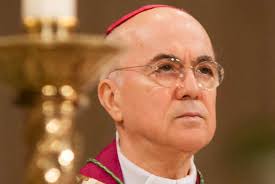
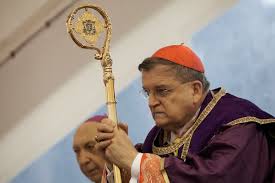
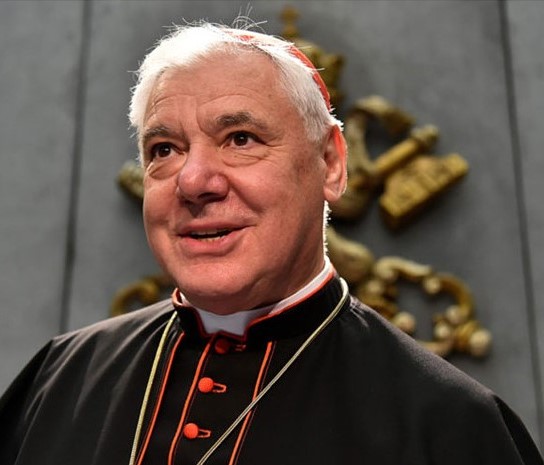
Card Burke and Bp. Schneider wrote  in detail about the errors of the Synod; Archbishop Vigano (see below) links it to the infiltration of freemasonry into the Church; Cardinal Mueller comments; and Mother Miriam speaks from the heart- clearly stating the errors being proposed in the synod and replying with the relevant Truths of the Catholic Faith.


“There has been a campaign to “infiltrate” the Church “that goes back centuries,” Archbishop Carlo Maria Viganò said in a new interview with Dr. Robert Moynihan of Inside the Vatican.

This campaign can be traced “in particular, to the creation in the middle of the 1700s of freemasonry,” said Viganò. …

…In a previous interview with Moynihan, Viganò said the “figure of Christ is absent”(*) from the working document of the Amazon Synod…”

* (This is typical of humanism- Christ is replaced)

https://www.lifesitenews.com/news/archbishop-vigano-we-are-witnessing-creation-of-a-new-church?utm_source=LifeSiteNews.com&utm_campaign=5a1fcbb3c4-Catholic_9_17_19&utm_medium=email&utm_term=0_12387f0e3e-5a1fcbb3c4-404516985

  • Card. Burke and Bp. Schneider: the inherent errors

“Among the principal errors, we especially note the following;

      1.   Implicit Pantheism
      2. Pagan superstitions as sources of Divine Revelation and alternative pathways for Salvation
      3. Intercultural dialogue instead of evangelization
      4. An erroneous conception of sacramental ordination, postulating worship ministers of either sex to perform even shamanic rituals
      5. An “integral ecology” that downgrades human dignity
      6. A tribal collectivism that undermines personal uniqueness and freedom

For example ( from Card. Burke and Bp. Schneider’s Pdf document)

Mother Earth”; … live “in communion with nature as a whole”;

(n°18) and “in dialogue with the spirits (n°75);

harmony of relationships” between “the whole cosmos – nature, men, the supreme being” and the “various spiritual forces” (n°12 &

13), captured in the “mantra” of Pope Francis: everything is connected (n°25);                  …

The Magisterium of the Church rejects such an implicit pantheism as incompatible with the Catholic Faith: “The warmth of Mother Earth, whose divinity pervades the whole of creation, is held to bridge the gap between creation and the transcendent Father-God of Judaism and Christianity, and removes the prospect of being judged by such a Being. In such a vision of a closed universe that contains ‘God’ and other spiritual beings along with ourselves, we recognize here an implicit pantheism(Pontifical Council for Culture & Pontifical Council for Interreligious Dialogue, “Jesus Christ. The Bearer of the Water of Life: A Christian Reflection on the ‘New Age’”, 2.3.1).

Read:  https://remnantnewspaper.com/web/index.php/fetzen-fliegen/item/4606-cardinal-burke-and-bishop-schneider-call-for-crusade-in-runup-to-amazon-synod

and  download the pdf by clicking on “  eight-page declaration  “


  • Cardinal Mueller:

“…What he believes the Instrumentum laboris is missing, however, is “a clear witness to the self-communication of God in the verbum incarnatum, to the sacramentality of the Church, to the Sacraments as objective means of Grace instead of mere self-referential symbols…”

That “the integrity of man does not only consist of the unity with a bio-nature, but in the Divine Sonship and in the grace-filled communion with the Holy Trinity,” he explained, not only with the environment and our shared world.”

… “But the contemplation of the cosmos is only the occasion for the glorification of God and His wonderful work in nature and history. The cosmos, however, is not to be adored like God, but only the Creator Himself.”

“Instead of presenting an ambiguous approach with a vague religiosity and the futile attempt to turn Christianity into a science of salvation by sacralizing the cosmos and the biodiverse nature and ecology, it is about looking to the center and origin of our Faith,” he said, the Incarnation.

https://www.catholicnewsagency.com/news/cardinal-mueller-criticizes-false-teaching-on-revelation-in-amazon-synod-doc-97284


  • Mother Miriam comments on the Amazon Synod:

“…The goal of the “Global Pact on Education” is to hand “on to younger generations a united and fraternal common home.” Mother told listeners this is the “common home of the devil. There is no common home we have but Heaven and Christianity on Earth this side of Heaven. We have no common home other than that.”

…. “This [the Global Education Pact],” the pope said, “will result in men and women who are open, responsible, prepared to listen, dialogue and reflect with others, and capable of weaving relationships with families, between generations, and with civil society, and thus to create a new humanism.” Mother called the pope’s initiative to globalize educationdemonic.”    …

Pope Francis stated that to reach his proposed objectives, everyone needs to “have the courage to place the human person at the center and to “train individuals who are ready to offer themselves in service of the community.”  To this Mother responded, “Isn’t that what is wrong with our world today, beloved? Instead of placing Christ at the center, we place man at the center?

The article Mother went through outlined the pope’s objectives, including to “heal the fracture between man and the Absolute.Mother noted that “the Absolute is an ambiguous phrase and could refer to Buddha, the Muslim god, or any god. “What happened to God? The Absolute is not one of God’s names.” …

https://www.lifesitenews.com/news/popes-proposal-for-new-humanism-would-wipe-out-christianity?utm_source=LifeSiteNews.com&utm_campaign=19292df9f4-Catholic_9_26_19&utm_medium=email&utm_term=0_12387f0e3e-19292df9f4-404516985


Prophecies from the Book of Truth :

These prophecies, have been telling us since March 2013 (when this man was elected as pope), that Pope Francis would introduce a “new humanism”.

It is the exact phrase used by Pope Francis “new humanism”. In these prophecies, Jesus, God the Father and Our Lady warn us of what is to come, so that we are ready and not deceived.

Other prophecies also  mention the *”New Evangelisation which pope Francis mentioned earlier this year.

The prophecies about the “New Evangelisation” include:

“…With so much confusion in the world and amongst My Church on earth, the challenge for humanity is to be able to differentiate between right and wrong in the Eyes of God. But, for many Christians, they will be drawn away from Me by a new global form of evangelisation, which will focus exclusively on politic...” (Book of Truth – 1 Jan. 2015 )

“In the name of social justice and social compassion, the false prophet will set out, what the world will believe to be, to evangelise and create a modern church. This church will be seen to reach out to all sinners and to embrace those sinners whose sins are not acceptable by Me.(Book of TruthAugust 10th, 2013 )

Read the words in the prophecies below that describe what “humanism” is and what it is not, and the direct effects it will have on us.

Some of the prophecies warning us about “Humanism” include:

Be careful when you embrace humanism, because when you do, you cut yourselves off from Me {Jesus Christ}.” – July 27th, 2013 @ 19:22

Humanism is an affront to God because it focuses on man’s needs and not the need to repent of sin before the Creator of all that is. If you ignore the mortal sins, clearly defined in the Laws laid down by God, which lead to eternal damnation, then no amount of compassion for the civil rights of the human race will atone for those sins.” – December 25th, 2014 @ 15:10

It will be presented to the world as a new form of social justice – a new form of humanism, when all the needs of man are catered for.” – May 19th, 2013 @ 20:08

They will use the message of humanism, love of one another, in terms of your ability to look after the poor, uneducated and needy, as a substitute for the Truth you were given in the Gospels.”November 9th, 2013 @ 11:48

“My Church, when it divides and falls, will embrace humanism with great relish” – June 27th, 2014 @ 22:11

When you promote humanism and urge those souls within your diocese to do the same, you reject Me.” – December 10th, 2013 @ 23:00

Humanism is not Christianity.” – March 29th, 2013 @ 19:00

The True Church will become a Remnant… Not only will they not serve Him, their duty will be to serve the needs of humanism, which will, at its very core, deny the Existence of the Supernatural State of God and all that He stands for.” – June 28th, 2014 @ 15:03

“Most importantly, it will be presented as being harmless fun for those who dabble in new age practices and as being an important part of personal development a form of humanism and love of self. – June 3rd, 2013 @ 21:50

“You will betray Me; deny Me and embrace My enemies, for you will be so caught up in the new religion – the secular humanism, which will come as a wolf dressed in sheep’s clothing to devour you – that I will be forgotten.” – June 30th, 2014 @ 23:50

“As and from this year, My Crosses will begin to disappear and while My Churches, and those who say they serve Me, talk about the importance of humanism, you will not hear talk of the importance of surrendering to Me, Jesus Christ, your Saviour.” – April 18th, 2014 @ 23:24

 Humanism will become the substitute for Christianity where no mention of God will be uttered – August 8th, 2014 @ 21:15

*“My dear child, the world will soon be presented, by the enemies of my Son, with a wicked book, which will have the number one embedded within its cover in red and black with the head of a goat hidden within its design. …. It will be a book, which sets out to evangelise the world into believing in the importance of humanism.” – June 6th, 2014 @ 23:15

All messages from the Book of Truth can be accessed from: https://missionofsalvation.com/


Conclusion:

When you connect the dots – you see the connections between Humanism, Marxism, Communism, Liberation Theology, Freemasonry, Ecclesiastical Freemasonry, the United Nations, the Jesuits and Pope Francis.We were warned!

**We were also alerted by the Vatican a few months back about the  ”New Evangelisation”. (See our series of 4 parts posted on this posted on 1, 2 3 and 4 May 2019)

**According to the prophecy (the last one listed above) – this evangelisation will be via the Red and black book with the goathead hidden in its design)

No doubt this will go hand in hand with the “New Humanism”, which the pope has clearly called for here:

https://www.lifesitenews.com/news/pope-francis-global-education-pact

We have had plenty of notice. All the signs are there, but sadly, still many (most) people will be deceived and gleefully go to their doom. We have to fight – to spread the Truth and to pray, pray, pray. Souls are at stake.

Get ready. The Pan- Amazonian Synod looms !!!!!


Connecting the dots…

See Part 1 at:  https://remnantdisciplesjtm.com/2019/09/24/connecting-the-dots-part-1-the-new-humanism-and-pope-frances/

See Part 2: https://remnantdisciplesjtm.com/2019/09/26/connecting-the-dots-part-2-humanism-and-its-links/

Part 3:  https://remnantdisciplesjtm.com/2019/09/27/connecting-the-dots-part-3-pf-liberation-theology-and-freemasonry/


Australia’s Plenary Council: “Blueprint for de-Catholicization”

AM+DG

ChurchMilitant.com posted an article entitled: “Leftists Crafting Vision for New Australian Church”     and subtitled“Plenary Council 2020 a blueprint for de-Catholicization” . It was posted by Stephen Wynne  on July 30, 2019  

On 28th July, the National Centre for Pastoral Research issued “Listen to What the Spirit is Saying, the 314-page final report on the preparatory “listening and dialogue” sessions of Plenary Council 2020. 

You can read all about the “remaking” of the Catholic Church in Australia here: https://www.churchmilitant.com/news/article/looking-ahead-to-the-1970s

______________________

Background to The Plenary Council and its implementation – a personal view

This Plenary council has been planned way back – after the synod of 2015.  See our article 31 Dec. 2016 at:  https://remnantdisciplesjtm.com/2016/12/31/archbishop-mark-coleridge-showing-his-true-colours/  

and also:

https://remnantdisciplesjtm.com/2016/08/21/the-bishop-of-brisbane-joins-the-throng/

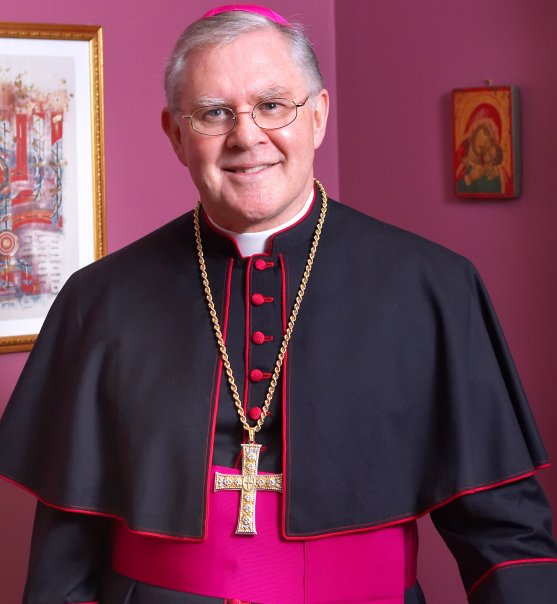
When I read the statement that there would be a council in Australia in 2020 , I thought it was to carry out the fp’s agenda – which was quite clear after that synod. But I thought “Who is he (Bishop Coleridge) to make this decision?” He was just a bishop in one capital city. He is as modernist as they come. He was one of the first bishops to condemn the Book of Truth. Say no more!!

Read about his heresies, blasphemies and the erotic play he staged in a beautiful historic Church – in front of the tabernacle in the Sacred Space of the altar.  Read more about these in one of our previous posts: https://remnantdisciplesjtm.com/2016/12/31/archbishop-mark-coleridge-showing-his-true-colours/

and also the article in LifeSite News:nude-fashion-show

https://www.lifesitenews.com/news/catholic-archdiocese-allows-sacrilegious-sexually-charged-fashion-show-in-a

This was the best picture (at right) I could post – you would not want to see the true horror of it all.

Since then he has been elevated to the head of the Bishops’ Conference in Australia. It’s always a surprise to see how things pan out. And I can’t help to think that they had to somehow get Cardinal Pell out of the picture.

Earlier this year, in the parishes, there were the usual “survey forms” asking all the leading questions – just like before the synods of 2014 and 2015. This is predictable. They can say that it was the will of the people. And so many of the faithful will be deceived, and just go along with it all – to their own peril.

___________________________

Tony M. on the final preparatory Report just released on the Plenary Council to be held in Australia in 2020.

” What you read (in Stephen Wynne’s article on Church Militant – see link at top of page) is exactly what so many of us saw coming with the Plenary Council in Australia( A trumped up name to make this process look as legitimate as possible).

The thoughts of those who have contributed to this document (the preparatory statement of Plenary Council) are the thoughts of people who have lost the true Catholic faith. The document is a natural flow on from the Apostolic Exhortation ‘Amoris Laetitia‘ and the Instrumentum Laboris for the Pan-Amazonian Synod & along with other documents issued from the man currently occupying the Chair of Peter. 

If these recommendations were implemented, they would simply be the Australian Catholic Church implementing the heretical teachings in those documents, teachings that are in fact not compassionate, but that show no concern for the eternal future of the recipients of this heretical counselling that would bring hundreds of thousands in our country to receive Jesus in the Blessed Sacrament unworthily.…. and thus commit another mortal sin…. which if unrepented would result in their going to Hell forever.  Very Compassionate!!!! Sure!!….and in fact a show of compassion which is fake, and in fact a morally weak form of counselling that gives those, they are supposedly helping, the short term ‘warm fuzzies’ by making them feel very comfortable in sins that will take them to their eternal damnation.

Repeating….the thoughts of those in this document are the thoughts of people who have lost the faith and are in fact now in apostasy. Why don’t these people at least have the honesty to admit that they no longer believe in the teachings of the Catholic Faith most of them were born into….and to leave it and start a new ‘religion’ if it could even be called that. At least the initiators of the Reformation were truthful enough to do that. 

There are many who believe the listening and dialogue’ sessions are a sham to make Australian Catholics believe they had some input into the final heretical document which has probably already been produced, and also an excuse for the hierarchy to implement an heretical agenda.

As a Catholic speaker for over 25 years, having travelled the country to hundreds of parishes spreading Our Blessed Mother’s messages through Her various Apparitions (at much personal expense and family sacrifice), with the purpose of helping people reach salvation and to avoid Hell forever…..what I have read in the article ( see link at beginning of this post)  sickens me to the core.

May we pray for the conversion of all involved in this apostate agenda, and warn as many as possible of the nefarious purpose of the Plenary Council of Australia.

May we fight this agenda until we drop.

May we, if we are unable to stop it, never succumb to it, accept and go along with it.

May we build the Remnant Church that Pope Benedict spoke of when he prophesied, “She will become small and will have to start afresh more or less from the beginning. She will no longer be able to inhabit many of the edifices she built in prosperity.”

May we never lose the true Catholic Faith given to us by Our Lord Jesus Chris tHimself and faithfully preserved for us by our forebears through the 2000 year history of our wonderful Catholic Church.

May we pray fervently to God and His Holy Mother to help us right now.

There is no longer any time for sweet talk.

We must resist heresy and the desecration, irreverence and sacrilege against Jesus in the Blessed Sacrament of the altar. I have had indications more recently, that He is suffering so much from this in today’s Church.

God Bless,

Tony M

PS: I have felt for some time that with the upcoming Plenary Council, Australia is being used as a ‘guinea pig’ for the implementation of Bergoglio’s agenda as per Amoris Laetitia, the Pan Amazonian Synod etc etc…..and once implemented in Australia will then quickly be implemented in the Church all over the planet.”


Enough is enough!!!

AM+DG

This was sent to me from a friend.  I somehow missed this, although I must say I am not surprised. I am sure that it is all in preparation for the upcoming synod. A few months ago, there was the statement about “yucca” being used instead of wheat for the hosts used at Mass. Everyone jumped on it immediately, and the Vatican backtracked.

But they won’t give up. It is a clue. They are up to something – something very devious no doubt, and planting little seeds in the minds of the faithful. Okay, so people now know that it has to be wheat. So they had to drop another little poisonous seed – that Jesus is present in the bread!!!

Do they think that they can deceive people? The answer is “yes”- they think they can deceive and mislead people.

In fact Jesus is NOT present in the bread. The bread is bread and after it is consecrated, using the correct substance of wheat and the correct words that Jesus used – then it becomes the Body and Blood, Soul and Divinity of Christ. It is no longer bread.

Countless Eucharistic miracles have proven this point. The most famous and well known is that of Lanciano, which took place over1300 years ago. In the 1970’s top scientists tested a small piece (without knowing what it was or where it came from and testified that it was flesh from the human heart, and was as fresh as if the person had just died. It is the Eucharistic Heart of Jesus. The findings were very comprehensive and amazing. Look it up, if you don’t already know about it.

The pictures below speak a thousand words!!!

The following was sent to me by a friend – (Tony M.)

“Francis’ heresy on Eucharist.   June 2019

Many of you would have seen these articles a couple of weeks ago, some of you would not.

This is another heresy from the mouth of Bergoglio. But this one tops the lot. It is an outrage. It is denying the transubstantiation …..the miracle of all miracles……… the miracle where at the very centre of our Catholic Mass, with the words of consecration, the unleavened bread becomes the very Body, Blood, Soul & Divinity of Our Lord, God & Saviour Jesus Christ. The Eucharist is at the very centre of our Catholic Faith.

There have been an untold number of Eucharistic Miracles given to us by God to demonstrate to us that His Real Presence is in fact the undeniable Truth,  miracles that cannot be explained scientifically by anyone on the planet…….the only explanation possible…..that God performed these miracles at the supernatural level ie divinely above the natural. The most famous Eucharistic miracle being the one in Italian town of Lanciano over 1200 years ago.

  • Why does Bergoglio never genuflect or kneel before the Blessed Sacrament….it would seem because he believes Jesus has become bread & that it is only bread we have before us.

Please Cardinals, Bishops & priests of Our Church protect your flock from the heresies coming from the mouth & pen of this man, protect Jesus in the Blessed Sacrament from the desecration coming from the sanction of divorced & civilly remarried people receiving sacrilegious Communion ( as in the document Amoris Laetitia.)

Our spiritual Fathers, where are you??

Are you protecting yourselves rather than protecting Jesus in the Blessed Sacrament & protecting us?

Did you not give your lives to help as many of your brothers & sisters reach Heaven & avoid Hell??

It is time, not to be nice in order not to offend, but to be justly angry at the way Bergoglio and all of those on the liberal side of the Church are desecrating and showing so many levels  of irreverence and sacrilege towards the Body, Blood, Soul & Divinity of Jesus in the Holy Eucharist, just as Jesus Himself expressed ‘just anger’ towards the moneychangers for their desecration of His Father’s House. 

Enough is enough!!

https://gloria.tv/article/8PEvzC83coJM3rRVUSnLXhrVB

  • Francis’ Next Heresy: Jesus “Becomes Bread”

The Eucharist is “Jesus who becomes bread,” and contains the “entire reality of the Church,” Pope Francis claimed in his June 23 Corpus Christi homily.

He went on alleging that we find in the Eucharist God himself “contained in a piece of bread.” These formulations are profoundly heretical.

It is true that the Bible calls the Eucharist “breaking of bread”, “bread of the angels” or “bread of heaven.” However, it is wrong to state that “Jesus becomes bread” – even a first year theology student knows this.

The heretical concept pronounced by Francis is called “impanation.It denies transubstantiation and is usually explained with the wrong statement that “God has become bread.” Transsubstantiation is the changing of the bread’s substance into the substance of Christ’s body effectuated by the consecration during Mass.

In addition, the Church cannot be identified with the Eucharist as Francis did.
…………………………………………………………………………………..

Tony included an article, written by David Martin, from:

https://fatima.org/news-views/did-god-express-his-indignation-over-pope-francis/

Did God Express His Indignation Over Pope Francis?

by David Martin

Tuesday June 25th, 2019

On June 23, the date on which the Feast of Corpus Christi was celebrated in Italy and the Vatican, Pope Francis in his Sunday Mass sermon made what appeared to be an explicitly heretical statement. Speaking on the Holy Eucharist, he said:

“In the presence of the Eucharist, Jesus who becomes bread, this simple bread that contains the entire reality of the Church [Christ], let us learn to bless all that we have, to praise God, to bless and not curse all that has led us to this moment, and to speak words of encouragement to others.”

The theological fact is that Jesus does not “become bread,” but vice-versa. To say that Jesus becomes bread implies that Jesus changes and becomes something else, i.e. bread,so that only the substance of bread is present in the consecrated HostThis is what Protestants believe.

The truth is that during the Sacrifice of the Mass, the “simple bread” ceases and becomes Christ, so that only the substance of Christ is present….

By saying that the bread “contains” Jesus, Francis is also promoting consubstantiation, the coexistence of two substances together, i.e. Jesus and bread, which is what Luther taught and which the Church condemns.

Refuses to Kneel

As always, Francis did not kneel before the Blessed Sacrament at this year’s Corpus Christi procession, but stood between the kneeler and the altar, ignoring the kneeler. He refuses to bend a knee to his God, yet he otherwise loves kneeling, especially in front of migrants, prisoners, homosexuals or politicians. https://gloria.tv/article/unpToENcSRiQ32Fkn42hLsEGW

Quake Jolts Rome

Not surprisingly, an earthquake shook the city of Rome a few hours after Francis’ address.

Was this a sign from God? Was the Lord expressing His indignation over Francis’ error?”


In conclusion:

The very morning Tony M. sent me these articles and information, I was tidying up my trays and found an old piece of paper on which I had downloaded 2 messages from the Book of Truth. This was probably before we had them available in book form.
I, no doubt, was meant to find them!
There were 2 messages – the first we are all very familiar with, but it contained one sentence that made me take notice.
Title:  Mother of Salvation: Every single Sacrament will be changed beyond recognition.” ( 5 September 2013 @ 9:35am)
In this message it says
“…they will desecrate Him in many other ways. They will change the hosts for Holy Communion and the meaning of what the Holy Eucharist is...”
You can read the whole message here: https://missionofsalvation.com/message-0900/
 
But the next message dated 2 August 2012 was:
Title:
“Mother of Salvation: Soon you will be asked to give out a substitute for the Holy Eucharist, which will not be the Body of my Son.”
(2 August 2013 @ 3:10pm)
This message says heaps that we already know but this sentence caught my eye:
You must never accept that any other kind of bread is the Food of Life.”
Read the complete message here: https://missionofsalvation.com/Message-0863/ 


These statements, are not “just mentioned” by the FP. They are meant to prepare us so that we accept more easily what he has planned for what lies ahead. We have to be ready to fight. I think that perhaps I was meant to find these messages.

We have to be ready for all that this Synod sets before us. We have to alert people to the dangers of “altering the faith”, and the deceptions which will lead many, many faithful into adoring “the abomination ” and being led into hell.

The faithful as part of  the Mystical Body of Christ, must do all in our power to alert, not only lay people, but priests and bishops to the danger which lies ahead.

Pray daily for protection and invoke the aid of St Michael and St Joseph in defending the Church.

Thank You, Jesus, for being with us in all our endeavours and guiding us. Amen


The New Evangelisation: Part 4 – What can we expect from this new encyclical?

AM+DG

What can we expect from this new encyclical?

In reviewing the history of this papacy, probably nothing much about the True Faith, maybe evangelizing about helping the poor, that all faiths are equal and we all believe in the same God… Probably some half truths such as: Jesus loves all sinners (but he will omit the part where sinners have to repent of their sin);

This papacy has been proceeding slowly, step by step, changing our attitudes and our doctrine – sorry, he’s not changing doctrine , only “pastoral practice”. It will all sound so easy, so enticing, will make so much sense. After all, surely we have to adapt to modern society? It will seem like a breath of fresh air to many.

Many of the clergy are already afraid to speak up. They won’t have the courage to help us or alert us. We have to brush up on the Truths of our Faith and pray for discernment. Be on the alert.

You can be assured that this new evangelization is leading to the One World Church and probably also to the one-world government. They will be connected.

Is this document a part of the great Deception that is to come

Is this part of the ”trial that will shake the faith of many believers” and “an apparent solution to their problems at the price of apostasy from the truth”?  

The Catechism of the Catholic Church, section 675 states:

“Before Christ’s second coming the Church must pass through a final trial that will shake the faith of many believers. The persecution that accompanies her pilgrimage on earth will unveil the “mystery of iniquity” in the form of a religious deception offering men an apparent solution to their problems at the price of apostasy from the truth. The supreme religious deception is that of the Antichrist, a pseudo-messianism by which man glorifies himself in the place of God and of his Messiah come in the flesh.”

We can expect more of what has already been dished out. It will be about social justice and humanism. It will reach out to all – ignoring, perhaps even applauding sins. Christ’s teachings and God’s Commandments will be rejected or not mentioned at all.

Jesus tells us what to expect:

“In the name of social justice and social compassion, the false prophet will set out, what the world will believe to be, to evangelise and create a modern church. This church will be seen to reach out to all sinners and to embrace those sinners whose sins are not acceptable by Me”.(Book of TruthAugust 10th, 2013 )

“They will use the message of humanism, love of one another, in terms of your ability to look after the poor, uneducated and needy, as a substitute for the Truth you were given in the Gospels.” (9 Nov 2013)

“Those who uphold My Holy Word, given to man through the Gift of the Holy Bible, will be challenged and urged to accept amendments. These amendments will be given to them and they will be expected to swallow them, and accept them as The Truth. They amount to one thing….

They will urge those holy sacred servants of Mine, to accept tolerance of sin.

They will be told that God is an ever-merciful God and that He loves everyone. Yes, this part is true. But then, they will be instructed to condone laws, which are an abomination in My Eyes. The family unit, and the destruction of it, will be at the root of everything…

Be alert. Open your eyes and beg Me for the strength you are going to need, in order to stand up against this vile and wicked plan.

This battle within My Church on earth will be vicious. Priest against priest. Bishop against Bishop. Cardinal against Cardinal. …” (December 23rd, 2012)

“Stay awake”

“By their fruits you shall know them”


Note: This is the final instalment of this series.

The “New Evangelisation”: Part 1 – Evangelization before Catholic Doctrine?

See our previous post and how it fulfils prophecy in the Book of Truth at:

https://remnantdisciplesjtm.com/2019/04/30/beware-the-coming-of-the-new-evangelisation/

Demotion of the Congregation of the Faith and of the Congregation of Divine worship!!!This is a worry! The Church structure is there for a reason. Congregations are at the top of the ladder. Imagine if governments didn’t have an hierarchical structure. We have always been taught and we know that the Church is not a democracy. We are Christ’s faithful and we obey Him and serve Him and Him alone. Without an hierarchical structure – a structure where all are equal – chaos will reign.

Doctrine – Christ’s teachings – must be the basis of any evangelization. Otherwise what will be evangelised?  It opens the door to anything and everything. Just think of all the false teachings,  that have come from the man who sits on the chair of Peter and his cohort of modernist bishops.  It will be about caring for the poor and needy (but first and foremost importance is the salvation of souls), those perceived as to be discriminated against in society ( LGBTQI…) ; the erroneous statement that all religions are equal; and that there is no hell; divorce and receiving holy Communion is okay; fornication; adultery, sodomy …

Actually the moral basis of our society  will be further decimated. This ‘New Evangelisation’ could lead people to hell, if it is not based on Christs’s teachings – on Doctrine!

This new document  is to be announced in the forthcoming apostolic constitution Praedicate Evangelium on 29 June.

Steve Kojec, in his article of April 25, 2019 discusses the proposed structural changes and the problems associated with it:

“As successors of the apostles, the bishops don’t have an ecclesiological position that puts them below those who work in the Roman Curia,” Maradiaga said. Hence, once the constitution is approved, a bishop from any diocese, no matter how small, will have the same hierarchical power as the prefect of a Vatican dicastery.”

This is a worry: it means that any bishop can do exactly as he wants without interference from Rome. In fact, the former Congregation for the Doctrine of the Faith will be no more:

“… But some people I’ve spoken with are concerned that this change, inasmuch as it amounts to a demotion of the CDF, will damage that body’s authority to oversee bishops’ conferences, and the similar power of the Congregation for Divine Worship (CDW) — with subsequent potential to cause problems in the regulation of both doctrine and worship.”

Steve Kojec, in his article continues

“The main point of the new Apostolic Constitution is that the mission of the Church is evangelization,” said Gracias. “It puts it at the center of the Church and everything the Curia does. It will be the first dicastery. The name of the text shows that evangelization is the principal objective, ahead of anything else.”

… Considering the pope’s frequent condemnations of proselytism — specifically against “trying to convert people to one’s own belief” — one is left to wonder just what he thinks the word “evangelism” means.

Read more at: https://onepeterfive.com/vatican-super-dicastery-a-papal-promise-fulfilled/

On 29 April, LifeSite news stated that this new structure “will take precedence over the Congregation for the Doctrine of the Faith, which protects the integrity of Catholic doctrine concerning faith and morals…”

Read more at:  https://www.lifesitenews.com/news/pope-francis-to-raise-evangelization-above-Catholic-doctrine

Other structures already  in place:

Besides this new encyclical which will dissolve the power and hierarchical structure of the Vatican Curia, other structures have been put into place during the years of this pontificate.

A former encyclical “Magnum Principium” gave bishops the power to interpret and approve changes to the wording of liturgical texts;

“Amoris Laetitia” has promoted  sins against the Sacrament of Marriage and the Eucharist’ and therefore that of Penance…

“Laudato Si” has spoken of the “sins against the environment”. Pope Francis calls the Church and the world to ​acknowledge the urgency of our environmental challenges and to join him in embarking on a new path. (Is it a path away from Jesus?)


Humanism and secularism have been promoted over and above true Doctrine.It is a cunning tactic, because without reinforcing Church Doctrine, the Truth of Church Doctrine is being slowly wiped away from our consciousness and thus also fidelity to the Truth. It all reeks of heresy!


Note: Watch out for our next post:  “New Evangelisation”: Part 2 :”By their fruits you shall know them”

Longing for God: Homosexuals too

I have heard of several pieces of information about Bishop Vincent Long which greatly concern me. His opening speech said it was ‘not good enough’ to call the homosexual lifestyle intrinsically disordered, while treating them with compassion.  (Link to article here: https://www.theaustralian.com.au/national-affairs/parramatta-bishop-calls-on-church-to-accept-homosexuality/news-story/38408da11324d1ff8c427005aca3e6d4 )

He ordered a priest, that was imploring fellow priests and bishops to teach the truth about homosexuality, to cease and take down his video resulting in Catholic Church congregations being left confused, unaided and unguided in the recent vote – except by popular society.

He refused to urge people to vote ‘no’ against same-sex marriage in the recent Australian postal vote to change the law and apparently said “We have won” when the numbers came in as approving of the Aust. government changing the law to allow same sex marriage.  So what could be worse than that?

Blessing same-sex unions as if they are approved by God.

Why is this act so bad? True care for our homosexual inclined neighbour involves all Christians truly caring for, understanding and assisting them in their spiritual struggles. It involves self-sacrificial love. People experiencing same-sex attraction or participating in homosexual relations, long for God too. They too are made in the image of God, as all people are. The deepest desire of a human heart is to know and be loved Longing for Godby The Father. We were all made to know,  love and serve Him so we can be happy here on earth- and happy with Him in heaven (Baltimore Catechism). In fact, I do believe, as St. Augustine says, that our hearts are restless until they rest in Him.

“Thou hast formed us for Thyself, and our hearts are restless till they find rest in Thee.” (Augustine, Confessions (Book 1)

Gene Fant, of First Things blog, describes it thus:

The longing of our hearts for something more, something beyond ourselves is powerful. Intuitively, we know that we need something to complete our broken hearts, minds and spirits. Augustine rightly points out that our completion is found not in romance, wealth or learning but rather in the One who formed us.

(Taken from: https://www.firstthings.com/blogs/firstthoughts/2009/12/our-hearts-are-restless)

If you, or I, or the Church, pretends that it is fine to go on committing sins of a homosexual nature, among other sins, we exclude them from the joy and the happiness stored up for them by God. It is the deepest and most satisfying joy that a person can ever know. And we deny them the Truth, and the help they need, in order to inherit eternal life. There is no love in a person who hides the Truth and allows their neighbour to go to hell.

By God for God


This is why it upset me so much to hear that Bishop Vincent Long held an LGTBi symposium where, at the end of it, he told his priests that he wanted them to help find a way to bless same sex unions. Because to bless is to condone the sin. It is to lie to the sinner in the worst possible way and to abuse the privilege given by God to his sacred servants. It is to expect priests to assist in breaking God’s Commandments. God the Father will not (and cannot) bless what is an abomination in His Eyes. The blessing would, therefore, be empty, null and void. It would be counterfeit.

All of this I knew, when I heard the new intention of Bishop Vincent Long to find a way to bless same-sex unions and I  was simultaneously aware that another prophecy from the Book of Truth was being fulfilled; that they will ask priests to bless same-sex unions.

With this in mind, I felt the sobering need to warn Christians that blessing same-sex unions is unacceptable by giving them the words of Jesus from His prophetic message.

I Priest blessing marriage unionalso prayed about this: that God’s will be done and that I would find the right words  to explain this in a loving, sensitive but honest way. That night, I began to look for the exact message where God says He cannot condone same-sex marriage or ever bless them and why. Only my initial searches could not find the message I wanted which puzzled me. I jotted one related message down and went to sleep. The night and next day sped by, as I unexpectedly ended up in hospital and had to sleep most of the next day to recover. Regardless of this diversion,  I looked forward to prayer group the next morning and it was there that God stepped in.

At the end, we open the Book of Truth on a message for everyone to hear (after a prayer to the Holy Spirit). Mum asked me to choose a book and open on a passage. I chuckled a little when I saw the heading. It had opened on the exact message that I had been looking for but had been unable to find by my online searches! Later, I found out that my mum had also been searching for the message after I told her of our Bishop’s ultimate intention, but had similarly been unable to find the one about priests blessing same-sex unions! This was a little miracle. There are 5 thick volumes in the printed version of the Book of Truth and over 1330 messages, many going over several pages and we managed to open on the exact page that starts at the beginning of that particular message. You can see why an online search is usually easier!

By the Will of God, therefore, I now share it with you the whole message as given by Jesus in the Book of Truth:

Same sex marriage a grave sin

16 March 2012 @ 10:20pm

My dearly beloved daughter, the pain and suffering of My poor followers, who have to watch, helplessly, as new laws, contrary to My Teachings, are reaching unprecedented levels in the world.

Not only do you have to witness sin, children, you then have to watch as sin is presented to you where you are forced to accept it as being humane.

I refer to one sin in particular, same sex marriage, which is presented as a natural right. You are then expected to accept this abomination, as it is set before My Father’s Throne in a Church.

It is not enough for these people to condone same sex marriage in the eyes of the law, they then want to force God the Father to give them His Blessing. He could never do this, because it is a grave sin in His Eyes.

How dare these people think it is acceptable to parade this abominable act in My Father’s Churches?

Children, I love every soul.

I love sinners.

I detest their sin, but love the sinner.

Same sex sexual acts are not acceptable in My Father’s Eyes.

Pray for these souls because I love them, but cannot give them the graces they desire.

They must know, that no matter how much they try to condone same sex marriages, they are not entitled to participate in the Holy Sacrament of Marriage.

A Sacrament must come from God. The rules for receiving Sacraments must stem from My Father’s Teachings.

You cannot force My Father, God the Most High, to give His Blessing, or access to, His Holy Sacraments, unless they are respected in the way they are meant to be.

Sin is now presented in the world as a good thing.

As I have said before, the world is back to front.

Good is presented as evil and those people who try to live by the Laws of God the Father, are sneered at.

Evil, no matter how you dress it up, cannot be turned into an act of goodness, in the Eyes of My Father.

My Father will punish those who continue to flaunt their sins before Him.

Heed this warning, for your sins, which are carried out when you refuse to obey God, will not and cannot be forgiven.

This is because you refuse to accept sin for what it is.

Your Saviour, Jesus Christ


Child and Jesus